DeepSeek Opens Its App's Search, File and Voice Tools to Developers Through Its API
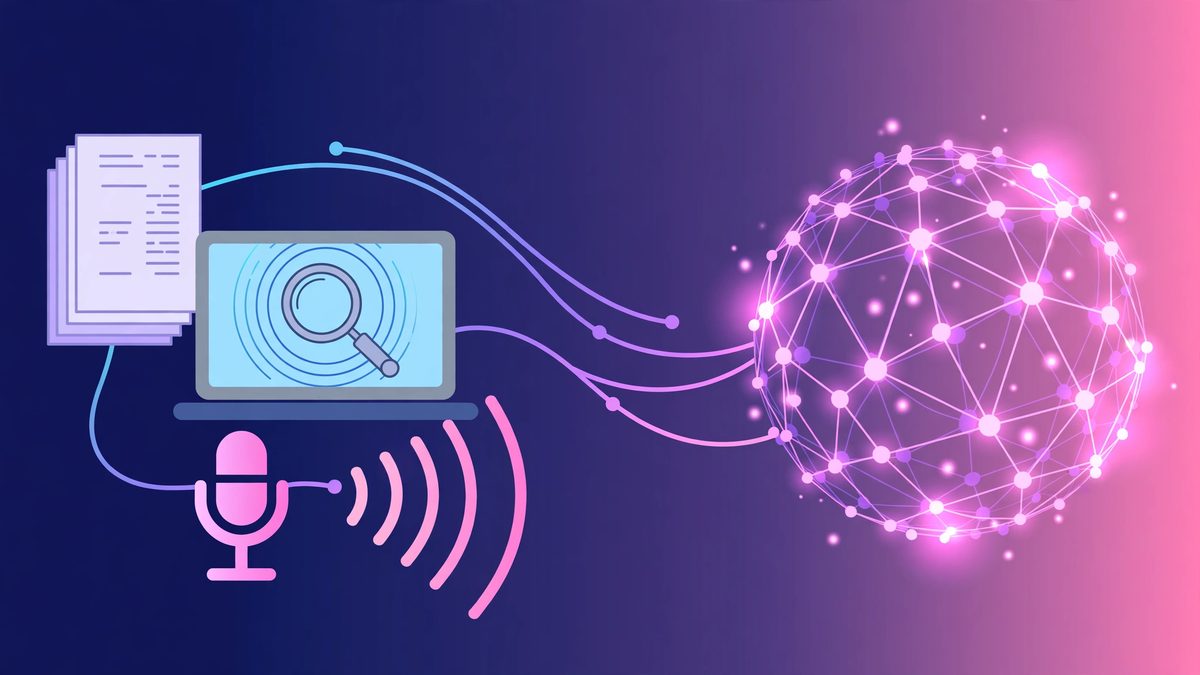
DeepSeek has opened the tools behind its consumer app to developers: built-in web search, document parsing, URL reading, safety checks, plus standalone OCR, speech recognition and text-to-speech APIs.
The app's toolkit, now available to builders
DeepSeek announced on November 13 that developers can now access the features behind its consumer app through the DeepSeek API. This is not a new flagship model. It is something more practical: the search, file-handling and voice tools that make the app useful are now available as building blocks for anyone creating their own AI assistant.
Until now, a team building an agent that could search the web, read a document or transcribe speech had to assemble all of that plumbing itself. DeepSeek's release removes much of that work. Developers can call built-in web search, run deeper multi-step searches, process uploaded files, fetch and read links, and apply safety checks — all through the Messages, Responses and Chat Completions interfaces for the deepseek-flash model.
What the release includes
The new capabilities cover the most common jobs an AI assistant needs to do with the outside world. The deepseek_web_search option adds live search results to a conversation, while deepseek_read_url fetches the content of a specific link. File input lets the model work with documents a user uploads, and built-in safety checks screen requests before they reach the model.
Alongside these built-in tools, DeepSeek is offering separate standalone APIs for search, fetching, optical character recognition, speech recognition and text-to-speech. That means a developer can use just the OCR service to read text from a scanned page, or just the speech tools to transcribe audio, without adopting the whole platform.
The costs and the catches
There are two things developers should know before building on these tools. First, the extended tools carry usage fees on top of ordinary token charges, so the total cost of a task is higher than a plain model call. Second, DeepSeek warns that public-facing applications must enable the safety checks, and developers remain responsible for moderation, registration and AI labelling where the law requires it.
Uploaded files also deserve care. Documents can carry hidden instructions, so file parsing should be tested with scanned PDFs, embedded tables and hostile content before it goes live. Live search results should be checked against their original pages rather than trusted blindly, and spending limits are worth setting for repeated tool calls.
A shift from models to full agent stacks
The release shows where competition among AI providers is heading. The model itself is no longer the whole product: the winner is the platform that supplies the complete set of primitives — search, retrieval, files, voice and safety — that turn a model into a usable application. Integrated tools can speed up prototyping and standardise how citations are handled. The trade-off is dependence: an application built around one provider's tool semantics can be hard to move elsewhere. For teams weighing that choice, the right test is the total cost of a finished task, including tool fees, latency and safety handling, not the token price alone.
Comments (0)